Can kids ride on motorcycles? Well, it depends on where you’re riding, and how old the child is.
As a motorcycle rider and enthusiast, it’s only natural for you to share your love of riding with your children. Of course, safety is your primary concern, so getting them the proper headgear and eye protection goes without saying. But, before you let a child ride along with you as a passenger, you need to know what the minimum age for motorcycle passengers is in your state.
It may come as a surprise, as it did for us, that only a handful of states enacted laws to set a minimum legal age for a child to ride as a passenger on a motorcycle. Let’s get into the details.
CAN KIDS RIDE ON MOTORCYCLES?
The short answer is yes, kids can ride as passengers on motorcycles. But, there are specific restrictions for motorcycle passengers in some states.
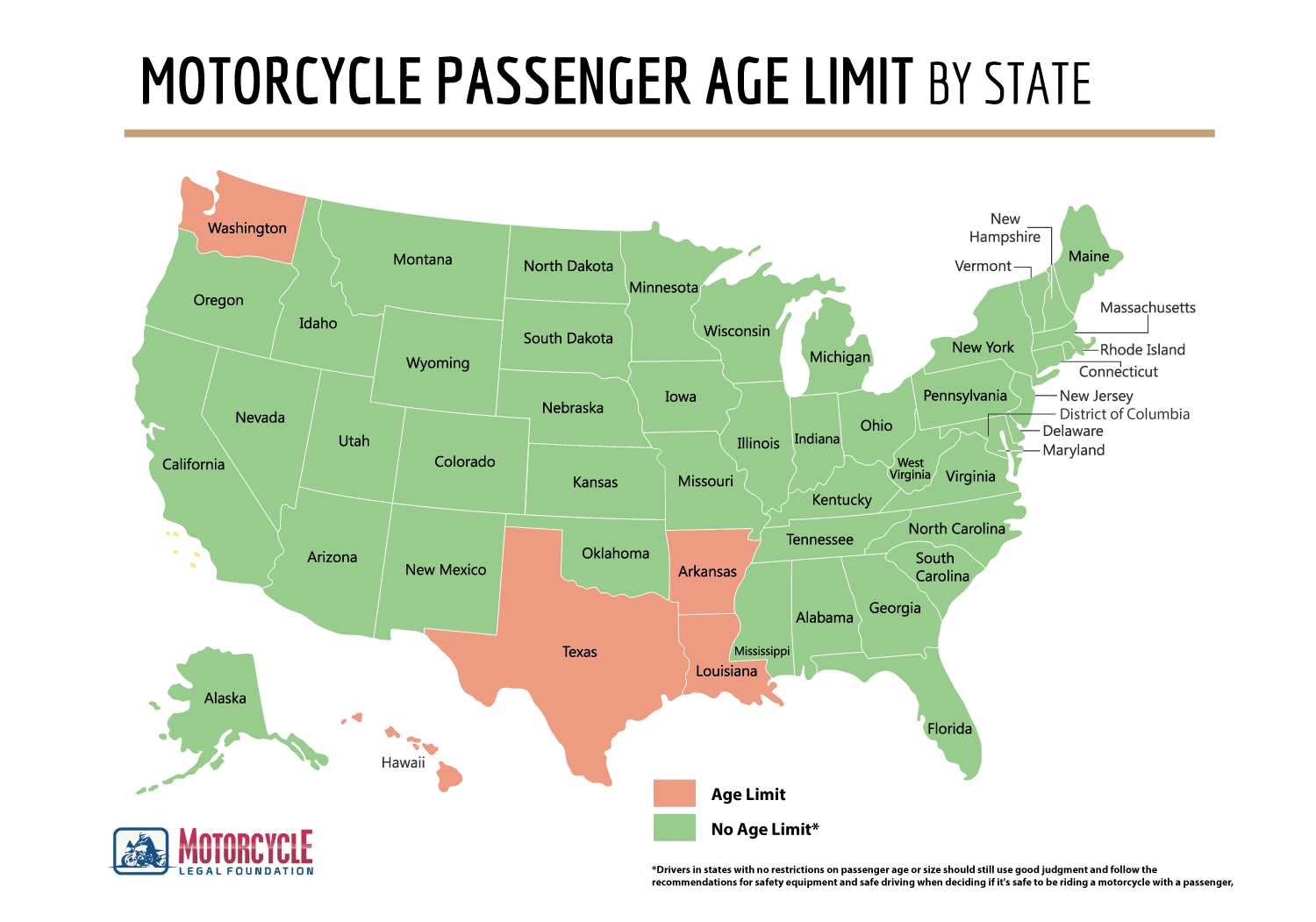
In Texas, Louisiana, and Washington, a child must be at least 5 years old to ride on a motorcycle. In Hawaii, the age minimum is 7 years old, and in Arkansas, it’s 8. However, the laws differ if the child is riding in a sidecar. As for other states, it’s generally about the height, not the age, of motorcycle passengers. For example, in California and Tennessee, the law states that motorcycle passengers must be able to rest their feet on footpegs when seated in a passenger seat, which equates to a height of about four foot nine on most bikes. Other states have similar provisions.
SAFETY FIRST
Wherever you live or ride, the safety of a child should be your top concern. Motorcycles certainly don’t provide riders with the same level of protection that cars and trucks would in a crash. Motorcyclists are nearly 28% more likely than car passengers to die in a crash per vehicle miles traveled, according to the most recent data.
Most states require that motorcycle passengers have their own seats and footrests. In states that don’t have helmet laws for drivers, passengers under a certain age still may be required to wear a helmet. For example, in South Carolina, all riders or passengers under 21 must wear helmets, while those above 21 don’t have to.
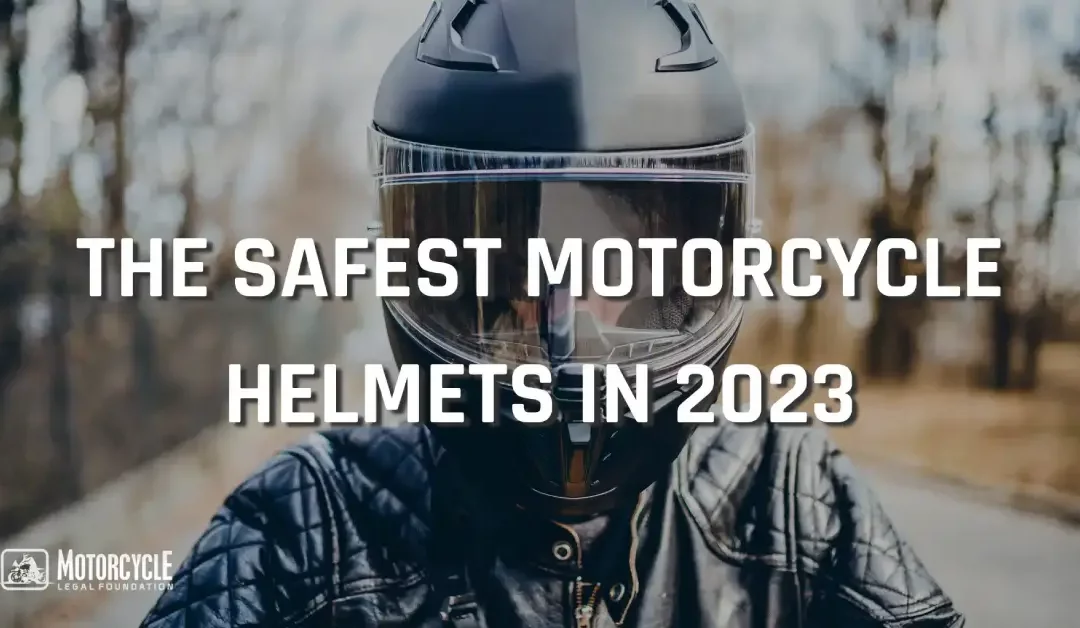
Given the risk of riding, we recommend all riders—kids especially—are fitted with proper motorcycle safety gear. The first priority is a properly fitted helmet, as data shows that helmets are 41% effective in preventing passenger deaths. Along with helmets and eye protection, any child riding a motorcycle should wear appropriate clothing to protect their skin from potential burns while on the bike and better shield them in the event of an accident.
HOW OLD SHOULD A CHILD BE TO RIDE ON THE BACK OF A MOTORCYCLE? STATE-BY-STATE GUIDE
Each state has its own laws pertaining to the operation of motorcycles. Whether you reside in the state and travel locally or happen to be passing through during a road trip, you must be aware of and obey the laws of each state where your travels take you.
Following are the laws governing passengers on motorcycles, including minimum age requirements, for each state:
| State | Minimum passenger age | Helmet requirement | Additional Notes |
|---|---|---|---|
| Alabama | None | All passengers must wear a helmet | Passengers must also wear proper footwear. |
| Alaska | None | Passengers under 18 must wear a helmet | No minimum age laws for passengers. |
| Arizona | None | Anyone under 18 must wear a helmet | Operator must have full license, not a learner's permit, to carry passengers. |
| Arkansas | 8 years old | Passengers under 21 must wear a helmet | Passengers must be at least eight years old. |
| California | None | All passengers must wear a helmet | Height style requirement: passenger's feet must touch footrests while seated. |
| Colorado | None | Anyone younger than 18 must wear a helmet | No age restrictions for passengers. |
| Connecticut | None | Passengers under 21 must wear a helmet | Newly licensed riders cannot carry passengers for 90 days; riders licensed before 18 must wait 6 months. |
| Delaware | None | Anyone 18 and younger must wear a helmet | No minimum age; helmet must be in the rider's and passenger's possession. |
| District of Columbia | None | All passengers must wear a helmet | No minimum age for passengers. |
| Florida | None | Passengers under 21 must wear a helmet | No age minimum, but strong helmet requirement for under 21. |
| Georgia | None | All passengers must wear a helmet | No age minimum if bike is properly equipped. |
| Hawaii | 7 years old | Anyone younger than 18 must wear a helmet | Children must be at least seven to ride as passengers. |
| Idaho | None | Anyone younger than 18 must wear a helmet | No minimum age if bike is equipped for passengers. |
| Illinois | None | No Law | No age restriction for passengers. |
| Indiana | None | Those younger than 18 must wear a helmet | No age restriction if bike is properly equipped. |
| Iowa | None | Anyone younger than 18 must wear a helmet | No age restriction for passengers. |
| Kansas | None | Anyone under 18 must wear a helmet | No age restriction for passengers. |
| Kentucky | None | Anyone younger than 21 must wear a helmet | No minimum age if bike is properly equipped. |
| Louisiana | 5 years old | All passengers must wear a helmet | Passengers must be at least five years old. |
| Maine | 16 | Helmet required for anyone on a motorcycle under 18 | There is a minimum age for riders; exact age not given in the provided text. |
| Maryland | None | All passengers must wear a helmet | State cautions adults about child passenger risks but sets no minimum age. |
| Massachusetts | None | All passengers must wear a helmet | No minimum age if equipment and helmet rules are met. |
| Michigan | None (must reach footrests) | Anyone under 21 must wear a helmet | Exemption if passenger cannot comply due to permanent physical disability. |
| Minnesota | None | Anyone under 18 must wear a helmet | No minimum age for passengers. |
| Mississippi | None | All passengers must wear a helmet | No minimum age restriction for passengers. |
| Missouri | None | All riders must wear a helmet | No age minimum for passengers. |
| Montana | None | Children under 18 must wear helmets | No minimum age for passengers. |
| Nebraska | None | Anyone under 21 must wear a helmet | No age restrictions for passengers. |
| Nevada | None | All passengers must wear a helmet | No age restrictions if reach and holding ability conditions are met. |
| New Hampshire | None | Riders and passengers younger than 18 must wear helmets | No minimum age requirement for passengers. |
| New Jersey | None | All passengers must wear a helmet | No minimum age if reach and equipment requirements are met. |
| New Mexico | None | Anyone under 18 must wear a helmet | No minimum age for passengers. |
| New York | None (must reach footpeg) | All passengers must wear a helmet | Children of any age can ride if they can reach the footpeg and wear a helmet. |
| North Carolina | None | All passengers must wear a helmet | No minimum age requirement for passengers. |
| North Dakota | None | Anyone under 18 must wear a helmet | No age restriction beyond helmet rule for under 18. |
| Ohio | None | Anyone under 18 must wear a helmet | No minimum age for passengers if equipment and helmet rules are followed. |
| Oklahoma | None | Anyone under 18 must wear a helmet | No minimum age for passengers. |
| Oregon | None | All passengers must wear a helmet | No minimum age requirement for passengers. |
| Pennsylvania | None | Anyone under 21 must wear a helmet | No minimum age for passengers. |
| Rhode Island | 16 | Anyone under 21 must wear a helmet | Extra backrest requirement for passengers younger than 12. |
| South Carolina | None | Anyone under 21 must wear a helmet | No minimum age requirement for passengers. |
| South Dakota | None | Passengers under 18 must wear a helmet | No minimum age for passengers. |
| Tennessee | None (must reach footpegs) | All passengers must wear a helmet | No specific age requirement if reach rule is met. |
| Texas | 5 years old | Anyone under 21 must wear a helmet | Children must be at least five to ride as passengers. |
| Utah | None | Anyone under 21 must wear a helmet | No minimum age requirement for passengers. |
| Vermont | None | All riders must wear a helmet | No minimum age for passengers if equipment and helmet rules are met. |
| Virginia | None | All passengers must wear a helmet | No minimum age requirement for passengers. |
| Washington | 5 years old | All passengers must wear a helmet | Children must be at least five to ride as passengers. |
| West Virginia | None | All passengers must wear a helmet | No minimum age for motorcycle passengers. |
| Wisconsin | None | Passengers under 18 must wear a helmet | No minimum age for motorcycle passengers. |
| Wyoming | None | Passengers under 18 must wear a helmet | No minimum age requirement for passengers. |
Have You Been Involved In A Motorcycle Accident?
Our professional legal team screens submissions and assigns cases to some of the best motorcycle lawyers in the US.
HOW TO PREPARE FOR RIDING ON A MOTORCYCLE WITH A CHILD
Regardless of what laws say about minimum ages for passengers, riding with a child who cannot comfortably rest both feet on the passenger foot pegs is unsafe. Assuming that your child meets that minimum requirement, here is how to get started:
- Make sure your bike meets the passenger requirements in your state, which likely includes having a passenger seat and rear footpegs.
- Your child needs a helmet that fits properly.
- The child should wear shoes or boots and protective eyewear and clothing.
- Show the child how to buckle and unbuckle the chinstrap. Emphasize the importance of keeping it buckled while on the motorcycle.
- Correctly position the child on the seat with feet on the pegs. Show the child how to hold you or handholds and stress the importance of doing so throughout the ride.
- Caution the child against making sudden moves while the motorcycle is in motion.
- Remind the child not to attempt to get off the motorcycle until you instruct them.
- Do a last-minute safety check of the motorcycle before heading off on your ride.
- Remind the child not to touch moving parts.
- Do not exceed the motorcycle’s weight limitations.
- Avoid high speeds and sharp turns.
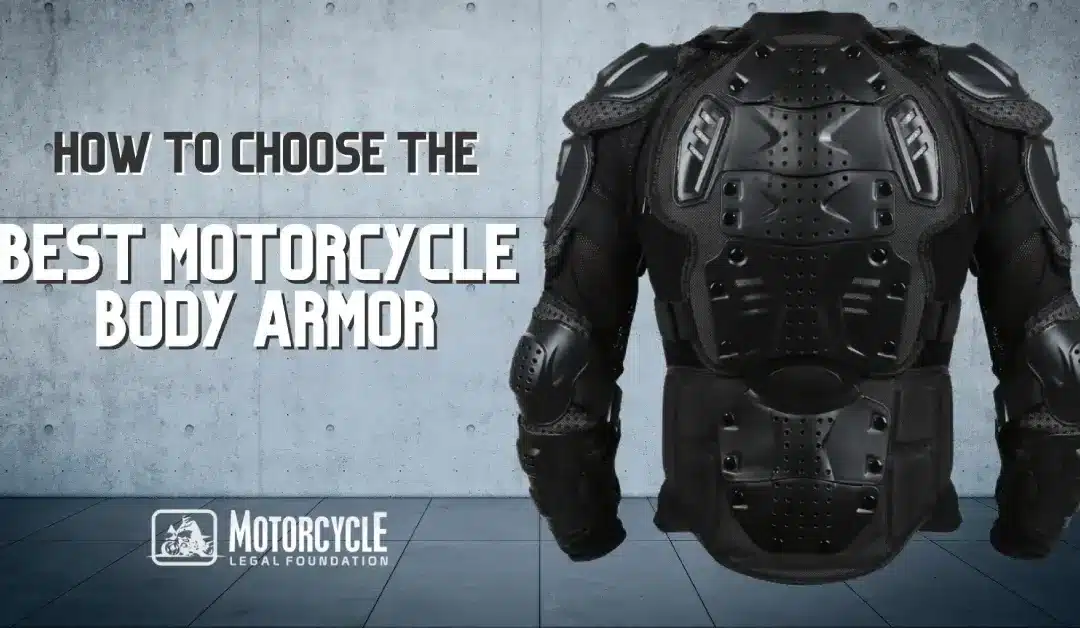
Long pants and long sleeves prevent burns from arms and legs coming into contact with hot surfaces, such as exhaust pipes. Everyone, including passengers, should wear them when riding. Protective clothing can also help reduce injuries, particularly during minor accidents or in case you lose balance and drop the motorcycle when stopped at a light.
You can safely share the joy of riding a motorcycle with your child, but be patient with it. First, research the minimum age restrictions that may exist, and then, ensure that you, your motorcycle, and your passenger have the right equipment to make it a safe experience.
Frequently asked questions
Are there special rules for long-distance or highway riding with kids?
Most states don’t have separate motorcycle passenger rules specifically for highways, but law enforcement typically advises riders to use extra caution at higher speeds, ensure children are wearing proper safety gear, and consider whether the child can stay awake, hold on securely, and remain stable for the duration of the ride. It’s also important to note that some insurance policies place additional restrictions on carrying younger passengers, especially on highways.
Can a child ride on a motorcycle without protective gear besides a helmet?
Legally, many states only require helmets for motorcycle passengers, but safety agencies strongly recommend additional protective gear like eye protection, gloves, a sturdy jacket and pants, and over-ankle boots. Parents often want to know the difference between what the law mandates and what experts consider the safest option, and understanding both helps them make more informed decisions.